

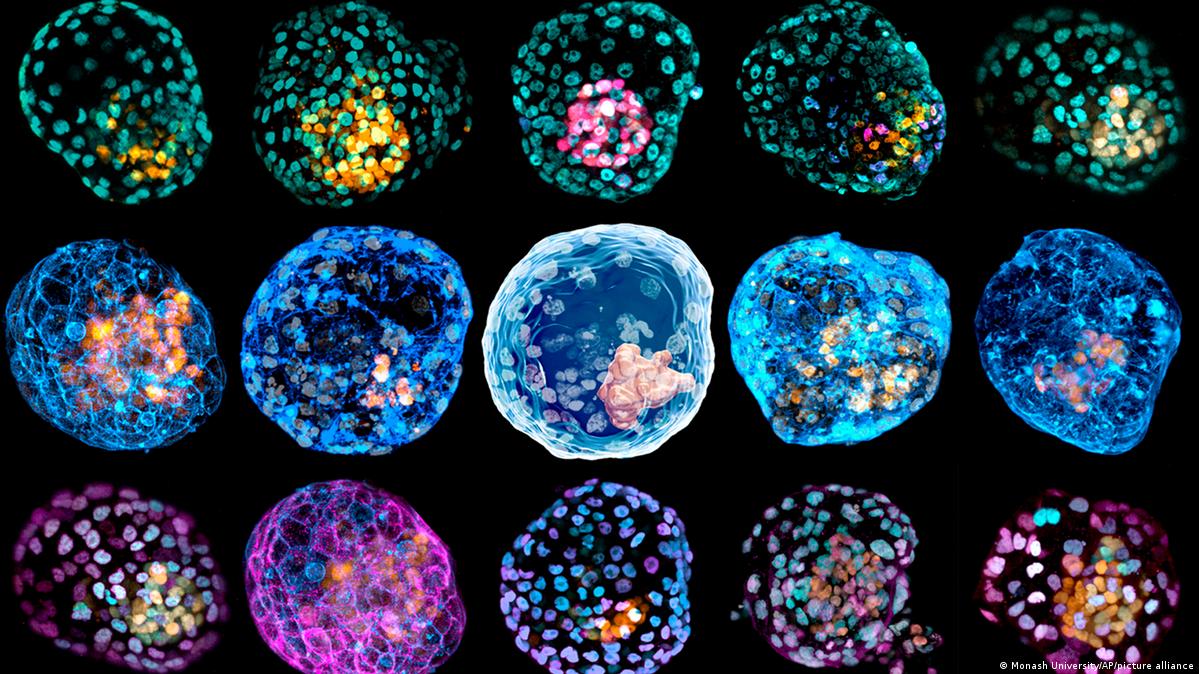
Researchers investigating the potential of synthetic human reproduction are gradually approaching a future where creating life might become possible without traditional reproductive cells like sperm or eggs. Although science has not yet reached that milestone, recent advancements in stem cell research are initiating new conversations about the ethical, biological, and societal impacts of generating human embryos through laboratory-produced cells.
At the center of these discussions are embryoid models, or “synthetic embryos,” which are clusters of stem cells manipulated to mimic the earliest stages of human development. These entities do not use sperm or eggs, nor do they implant in a womb. Instead, they are cultivated in laboratory settings, offering scientists valuable insight into embryogenesis—the process by which an embryo forms and develops.
The primary goal behind these studies is not to create life without reproduction, but rather to deepen understanding of early development, miscarriage, and congenital disorders. Yet, as synthetic embryo models become increasingly complex, closely resembling natural embryos, the line between scientific advancement and ethical overreach becomes less clear.
Embryoids, or embryo-like structures created from pluripotent stem cells, have been developed in mice and now in humans, though human versions remain at a significantly earlier stage. In mice, scientists have been able to coax stem cells into forming structures that include rudimentary organs, a neural tube, and even a beating heart. Though these models never develop into full organisms, their increasing biological similarity to natural embryos has generated global interest—and concern.
Human embryoids are currently unable to mimic all the key features of a viable embryo. They do not possess the necessary structures to implant in a uterus and cannot develop past a specific stage. Nonetheless, their value in scientific research is unmatched. They enable researchers to study early cellular activity without facing the ethical dilemmas associated with using fertilized embryos, which are frequently restricted by legal and regulatory limitations.
Scientists insist that the aim of this research is not reproductive, but investigative. Studying natural embryos can be difficult due to legal and moral restrictions, as well as the scarcity of available material. Synthetic embryos fill that gap, offering an ethically distinct way to explore why pregnancies fail, how genetic abnormalities emerge, and how early cell signaling works.
Additionally, these models are applied to assess the safety of new medications during pregnancy or examine the underlying causes of infertility. The capability to monitor development in a regulated setting provides opportunities for early interventions and preventive healthcare.
Although scientific optimism is prevalent, there are significant ethical concerns. Certain researchers are apprehensive that as embryonic models advance, society will grapple with defining the moral standing of these creations. When does a cluster of cells transform into an entity that merits rights or safeguarding? If these models closely replicate development, should limits be imposed on their growth duration or on the permissible experiments?
At present, numerous regulatory systems are not prepared to handle synthetic embryo models. In various nations, the legislation pertaining to embryo research was established prior to the advent of this technology, concentrating exclusively on fertilized embryos produced by in vitro fertilization (IVF). Consequently, embryoids frequently find themselves in a legally ambiguous area.
In the United States, for example, federal funding restrictions apply to research involving human embryos, but not to synthetic models that don’t result from fertilization. This distinction gives researchers leeway but also raises questions about oversight and consistency.
Some ethicists and research bodies emphasize the need for globally coordinated principles to ensure responsible development in embryoid studies. The International Society for Stem Cell Research (ISSCR) suggests that artificial embryo models should be overseen with the same level of attention and ethical examination as conventional embryos, particularly as they become more advanced.
The idea of creating life entirely in a lab—without sperm, egg, or uterus—remains firmly in the realm of science fiction. While embryoids can mimic certain developmental features, they lack the full genetic, structural, and environmental components necessary for viability. Current models cannot implant in a uterus or continue development beyond the early stages.
Still, the pace of advancement is fast. In 2023, researchers in Israel created mouse embryoids that survived for eight days—half the gestational period for a mouse—using only stem cells. They developed a neural tube, a beating heart, and blood circulation. Though these were far from full organisms, they suggested that complex development is possible in the lab under certain conditions.
These investigations spark curiosity: if mouse embryoids can progress to such an extent, could human embryoids reach the same stage in the future? And if they can, what implications would that have for our understanding of reproduction, parenthood, or potentially humanity itself?
As stem cell technologies advance, the scientific community faces a crucial challenge: ensuring innovation proceeds hand in hand with ethical reflection. Creating sophisticated models of human development may revolutionize medicine, but it also requires careful consideration of boundaries.
Public engagement will play an essential role. Transparent dialogue between scientists, ethicists, lawmakers, and society at large is needed to shape policies that reflect shared values while supporting responsible progress.
As things stand, the ability to create life without the use of sperm or eggs is out of the scientific grasp. However, each advancement in synthetic biology and the manipulation of stem cells intensifies the discussion about the definition of life and who has the authority to determine its course.
As laboratories push the frontiers of human development research, the world will need to reckon with profound questions that challenge existing norms and legal definitions. And while the promise of understanding life from its earliest moments is extraordinary, ensuring that promise is matched with responsibility will be the true measure of scientific maturity.
