

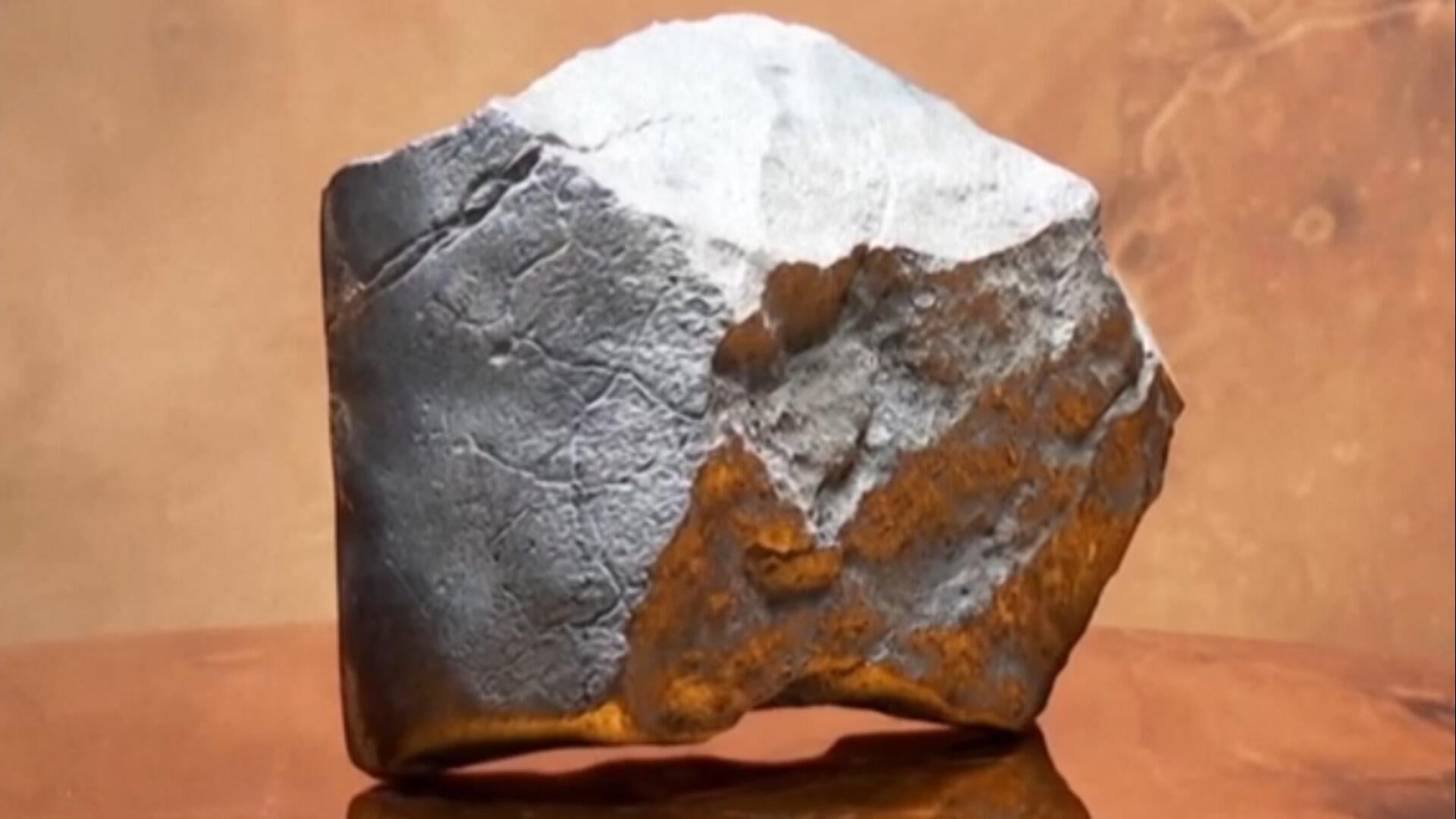
In the arid expanses of the Sahara Desert, a remarkable geological find once drew global attention—a massive fragment of Mars, ejected from the Red Planet’s surface by a violent cosmic impact and eventually landing on Earth. Weighing more than most meteorites and boasting an extraordinary scientific value, the specimen was hailed as the largest Martian rock ever discovered on our planet. Its journey from a remote corner of Niger to the international market, however, has now become the subject of a high-profile investigation.
Niger’s authorities have initiated an official investigation into the $5 million transaction involving this remarkable meteorite, bringing up concerns about ownership rights, export guidelines, and the moral obligations related to the trading of space material. For a country that is rich in geological resources yet faces economic difficulties, the situation highlights critical matters of national heritage, resource governance, and the expanding global market for unique celestial artifacts.
The stone, formally recognized as a meteorite from Mars due to its chemical makeup and isotopic markers, is thought to have reached Earth thousands, if not millions, of years in the past. It was found in a scarcely populated area of Niger, where seekers of meteorites, local wanderers, and global collectors occasionally come together searching for precious space stones. These kinds of meteorites can command significant prices in the private sector, with values shaped by dimensions, uniqueness, scientific relevance, and visual attractiveness.
According to reports, the sale in question involved a private buyer paying $5 million for the specimen, an unprecedented figure in the world of meteorite trading. While the identity of the buyer remains confidential, the transaction has brought to light a series of concerns in Niger over whether the rock was legally exported, whether the seller had proper authorization, and whether such an artifact should be treated as private property or as part of the country’s cultural and scientific patrimony.
Meteorites, though not conventional mineral resources, occupy a gray area in legal terms. Some nations explicitly regulate their collection and export, treating them as national property to be preserved in museums or research institutions. Others take a looser approach, allowing individuals to claim ownership if they find them on their land. In Niger’s case, laws exist to protect natural heritage, but enforcement has historically been inconsistent, especially in remote desert regions where government presence is minimal.
The ongoing research aims to establish the precise journey of the Martian rock—from its initial discovery within Niger’s borders to its ultimate purchase overseas. Officials are assessing if export permissions were issued, if the rock was illegally transported without valid paperwork, and if intermediaries took advantage of legal gaps to introduce it into the profitable global meteorite market.
This scrutiny comes amid broader debates about the ethics of commodifying objects with immense scientific value. Researchers stress that meteorites—especially those from Mars—are more than just collector’s items. They hold irreplaceable data about planetary history, geological processes, and the potential for ancient life beyond Earth. When such specimens enter private collections, access for scientific study can become limited, potentially delaying or obstructing discoveries that could benefit humanity as a whole.
For Niger, the matter is intertwined with national dignity and independence. In recent years, the nation has encountered difficulties regarding the utilization of its mineral resources, ranging from uranium to gold. The lack of proper compensation or supervision for a unique extraterrestrial find has sparked public demands for enhanced safeguards over the country’s natural and scientific resources. Some individuals within Niger’s academic circles are advocating for the government to set up an official meteorite registry, allocate resources for training local geologists, and form partnerships with international scientists to guarantee that future discoveries stay available for research.
The $5 million figure attached to this sale has only heightened tensions. While meteorite enthusiasts view such prices as reflective of market demand, critics see them as evidence of an unregulated trade that allows a few individuals to profit enormously from resources that arguably belong to all. The global meteorite market, with auctions held in Europe, the United States, and the Middle East, is often shrouded in secrecy, with many sales conducted privately between collectors.
Curiously, the interest in Martian meteorites goes beyond pure scientific interest. Their appeal is strongly linked to the enduring human intrigue with Mars—a planet that has fueled numerous myths, books, and space missions over time. Acquiring a piece of Mars is more than just owning something rare; it is about having a physical link to another celestial body, a part of the universe’s history that existed before humans. This combination of romantic allure, scientific interest, and exclusivity motivates collectors to spend significant amounts, adding complexity to the ethical and legal discussions.
Following the continuing inquiry, various global entities have shown curiosity in obtaining the rock for exhibition to the public, if Niger retrieves it. Museums focusing on planetary sciences contend that the piece should reside in a setting where both scientists and the public can examine and admire it, rather than being kept in private possession. Some propose that even if the rock stays with a private owner, arrangements might be reached to loan it occasionally to scholars or for public displays.
The case has also prompted discussions about the need for stronger global governance over meteorite trade, similar to conventions that protect cultural artifacts and endangered species. Advocates of such regulations argue that meteorites—especially those of exceptional scientific importance—should be recognized as part of humanity’s shared heritage, with clear guidelines on how they can be sold, studied, and displayed. Opponents counter that excessive regulation could stifle discovery, discourage private investment, and push the trade further into the black market.
In the meantime, the investigation in Niger continues, with authorities reportedly tracking down witnesses, reviewing export records, and consulting international experts. While the outcome is uncertain, the case has already served as a stark reminder that space rocks are more than just curiosities. They are pieces of other worlds, carrying within them the secrets of the solar system’s past—and perhaps clues to life’s origins.
Whether the $5 million Martian rock will be returned to Niger, remain in private hands, or end up in a public institution remains to be seen. What is clear, however, is that its journey from the Martian surface to a Saharan desert and into the heart of a legal and ethical debate underscores a truth that transcends borders: our planet is not the only one with a story to tell, and the fragments that fall to Earth are part of a much larger narrative—one that belongs to all of us.
