

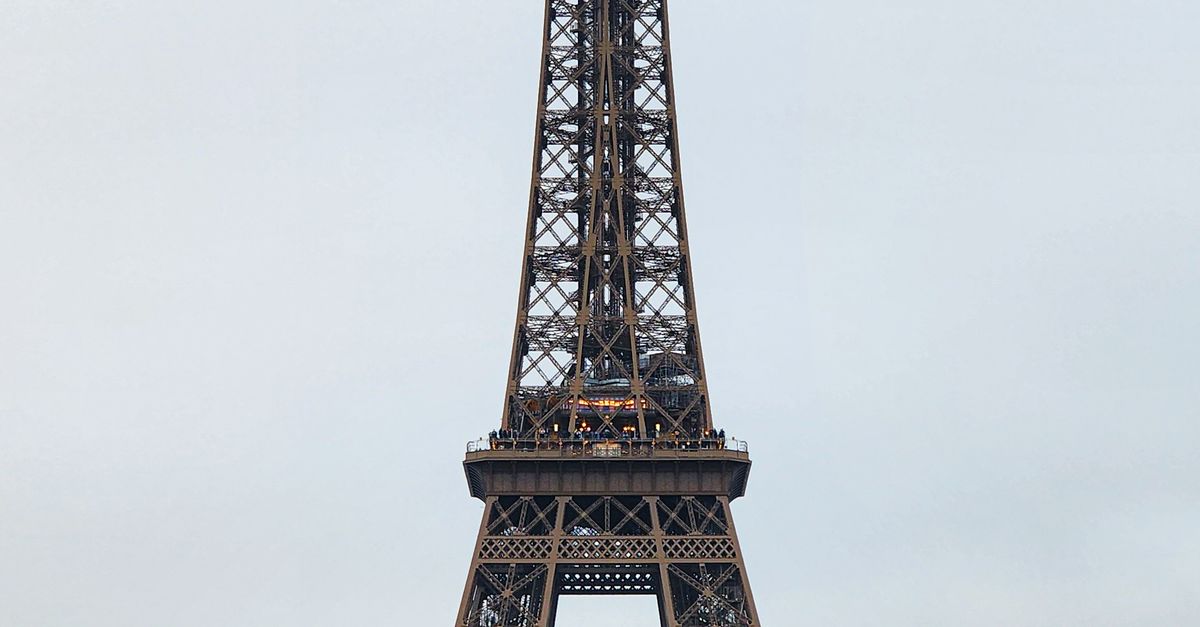
1. Eiffel Tower, France
The Eiffel Tower in Paris consistently ranks as the most visited paid monument in the world, attracting around 6 to 7 million visitors each year. Constructed in 1889 for the Exposition Universelle, it was initially criticized by prominent artists but later became the defining symbol of France. Rising 330 meters above the city, the iron lattice structure offers panoramic views from three observation levels.
Its global popularity stems from multiple factors:
- Iconic architectural design recognized worldwide
- Central location in one of the world’s top tourism cities
- Strong presence in film, media, and global branding
The Eiffel Tower also generates significant revenue for Paris through ticket sales, restaurants, and merchandising, making it a key economic driver for local tourism.
2. Great Wall of China, China
The Great Wall of China receives more than 10 million visitors annually across its various accessible sections. Stretching over 21,000 kilometers, it was constructed over several dynasties to defend against invasions.
The most visited sections, such as Badaling and Mutianyu, are carefully restored to accommodate tourism. Beyond its defensive function, the Wall represents endurance, national identity, and architectural ingenuity. Its vast scale and historical significance make it one of humanity’s most ambitious construction achievements.
3. Colosseum, Italy
Rome’s Colosseum draws upward of 7 million tourists annually. Having reached completion in 80 CE, the historic amphitheater previously staged gladiatorial battles and public events for a crowd exceeding 50,000 people.
Today, visitors explore underground chambers, seating tiers, and museum exhibits that detail Roman engineering techniques. Combined tickets with the Roman Forum and Palatine Hill further boost its attendance. The Colosseum remains a powerful symbol of ancient Roman civilization and architectural innovation.
4. Statue of Liberty, United States
The Statue of Liberty situated in New York Harbor greets roughly 4 million sightseers every year, which encompasses entry to Liberty Island and Ellis Island. Presented by France in 1886, this landmark serves as an emblem of freedom and democracy.
Tourists can access the pedestal and, with advance reservations, the crown. Its proximity to Manhattan and its historical association with immigration enhance its emotional and cultural resonance.
5. Taj Mahal, India
The Taj Mahal draws between 7 and 8 million visitors each year. Built in the seventeenth century by Emperor Shah Jahan as a mausoleum for his wife Mumtaz Mahal, it stands as a masterpiece of Mughal architecture.
Constructed from white marble inlaid with semi-precious stones, the monument changes hue depending on the light. Strict conservation measures, including vehicle restrictions nearby, help preserve its delicate materials from pollution damage.
6. Louvre Pyramid and Museum Complex, France
While primarily known as a museum, the Louvre Pyramid serves as a monumental architectural landmark in its own right. The Louvre Museum receives nearly 9 million visitors annually.
The glass pyramid, designed by architect I. M. Pei, contrasts boldly with the historic palace surrounding it. Housing works such as the Mona Lisa and the Venus de Milo, the Louvre’s monumental scale and artistic treasures make it one of the most visited cultural sites on Earth.
7. Forbidden City, China
Situated in Beijing, the Forbidden City welcomes upwards of 14 million guests each year, cementing its status as one of the globe’s most heavily trafficked palace grounds. Having functioned as the imperial seat for nearly five centuries, the landmark encompasses almost 1,000 structures.
Its symmetrical layout reflects traditional Chinese cosmology and imperial hierarchy. Today, it operates as the Palace Museum, preserving vast collections of art, ceramics, and historical artifacts.
8. Sydney Opera House, Australia
The Sydney Opera House attracts more than 8 million visitors to its site annually, with over 1.5 million attending performances inside. Completed in 1973, its sail-like design revolutionized modern architecture.
Beyond performances, guided tours and waterfront views draw global tourists. The building’s innovative engineering and cultural programming have transformed it into an international symbol of Australia.
9. Christ the Redeemer, Brazil
Overlooking Rio de Janeiro, Christ the Redeemer receives around 2 million visitors per year. Completed in 1931, the 30-meter statue stands atop Corcovado Mountain.
Accessible by train or van, the site offers sweeping views of the city and coastline. The monument has become synonymous with Brazilian identity and hosts major religious and cultural events.
10. Machu Picchu, Peru
The Incan citadel of Machu Picchu welcomes roughly 1.5 million guests every year, notwithstanding stringent daily admission caps implemented to protect the landmark. Brought back to global attention in 1911, the structure originates from the 15th century.
Its mountaintop location, advanced stone construction, and mysterious abandonment fascinate historians and travelers alike. Sustainable tourism policies now regulate foot traffic and guided routes to prevent erosion and structural damage.
Why These Iconic Landmarks Rule International Travel
Several shared characteristics explain their exceptional attendance:
- Historical depth linked to prominent civilizations or national identity
- Architectural distinction that produces immediately recognizable silhouettes
- Strategic urban or scenic locations embedded within major tourism circuits
- Strong global branding bolstered by media, education, and digital exposure
These monuments function not only as physical landmarks but also as economic engines. They generate billions in tourism revenue, support hospitality industries, and shape international perceptions of their countries.
Across continents and cultures, the world’s most visited monuments reveal humanity’s enduring desire to build symbols that transcend time. Whether constructed as expressions of power, devotion, art, or remembrance, they continue to gather millions of people each year, transforming stone, steel, and marble into shared global experiences.
