

The Multifaceted Symbolism in Stanley Kubrick’s ‘The Shining’
1980’s film adaptation of ‘The Shining’ by Stanley Kubrick, based on Stephen King’s novel, transcends the typical psychological horror genre to become a true maze of symbolism, intricate meanings, and film references. The Overlook Hotel serves not merely as a setting for fright but as a dynamic entity, its architecture filled with motifs that require analysis. In-depth examination of Kubrick’s symbolic approach unveils how the movie generates a lasting feeling of discomfort, igniting years of critical discussion and audience intrigue.
The Overlook Hotel: A Manifestation of Psychological and Historical Hauntings
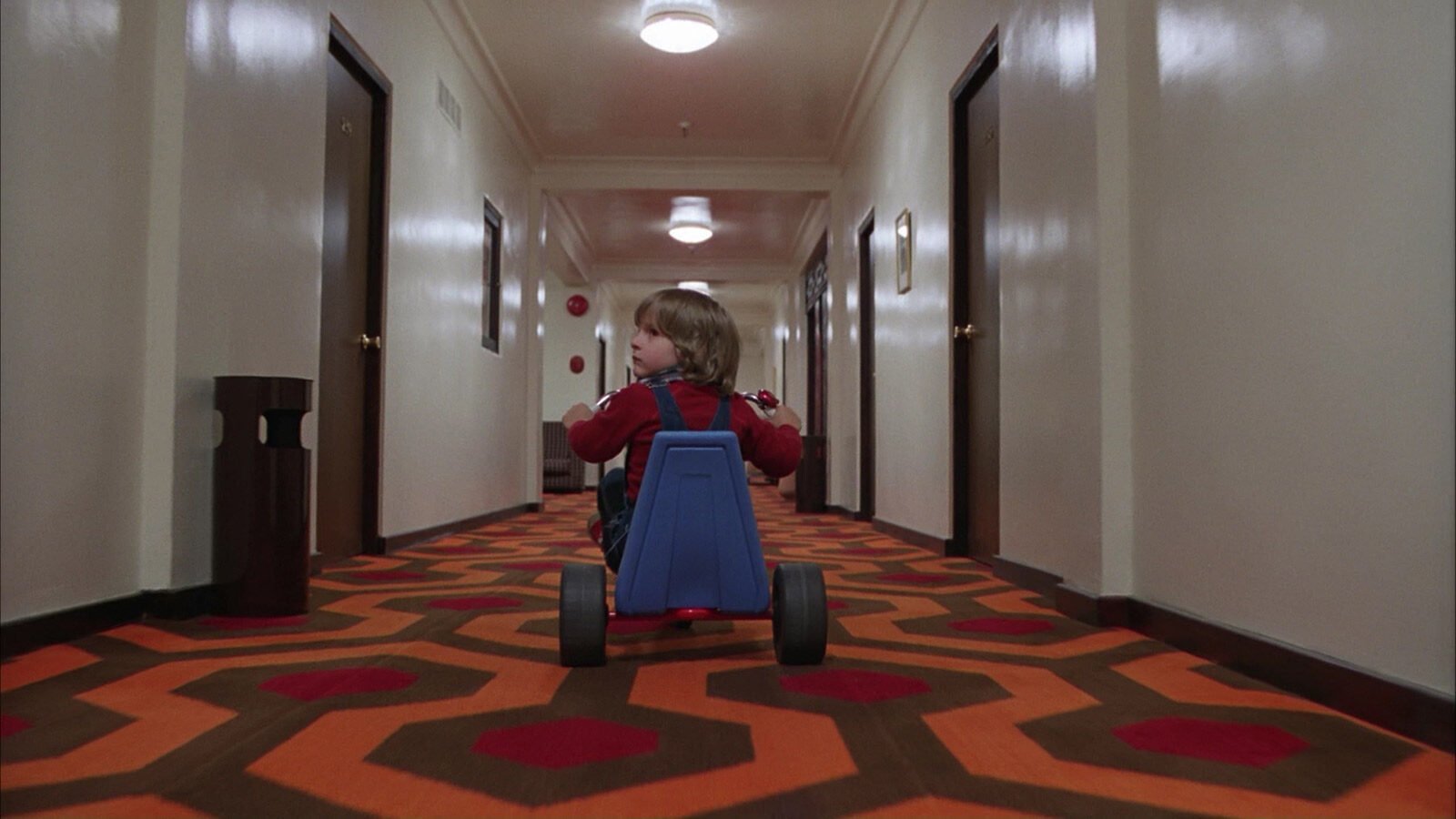
The Overlook Hotel emerges as a significant location and an emblem of mental confinement. Its shifting design, inconceivable windows, and labyrinthine hallways create a sense of confusion, mirroring Jack Torrance’s worsening mind. The hotel acts as a small-scale version of suppression—a magnificent structure based on violence and hidden truths. The repetitive theme of Indigenous American symbols, embedded in carpets and wall designs, indicates the hotel is erected on the scars of America’s past.
Some researchers suggest that Kubrick deliberately emphasizes the United States’ troubled history, particularly by alluding to mass extermination. Stuart Ullman’s reference to the hotel being constructed on a “Native American burial site,” reinforced by Calumet baking powder cans and woven Indigenous designs, links the paranormal occurrences to a larger cultural forgetfulness.
The Labyrinth: Intricacy, Captivity, and Psychological Challenges
At the heart of the movie’s symbolism is the hedge maze—a creation exclusive to Kubrick’s version. It functions as both a real and metaphorical labyrinth, symbolizing Jack’s fragmented mind, deeper psychological conundrums, and the wider theme of existential confusion. The aerial scenes of Danny navigating the paths, along with Jack’s ultimately futile pursuit, illustrate a conflict that is both internal and external. The maze’s intricate design reflects the hotel’s architectural inconsistencies and the perplexing layout that challenges spatial logic.
The way out of the labyrinth—Danny managing to get away by tracing his own steps in reverse—acts as a representation of wit and endurance through mental strength. This starkly contrasts with Jack’s inability to overcome his compulsions and aggressive impulses.
The Color Red: Violence, Warning, and Pervasive Dread
Kubrick uses color symbolism in the movie, with red notably representing violence and mental breakdown. The doors of Room 237, the notorious “REDRUM” message, and the flood of blood from the elevator enhance the looming threat. Each red element is precisely crafted to indicate approaching peril or inner chaos. Wendy wielding a bat in the crimson hallways, Danny meeting the twin girls in identical outfits, and the eerie interaction of shadow and light emphasize Kubrick’s goal to make red a constant menace.
Mirrors and Reflections: Duality and Dissociation
Mirrors and reflections occupy a crucial place in the symbolic landscape, echoing the theme of duality. Mirrors show Jack’s descent into madness, particularly during the unforgettable bathroom scene with the ghostly woman from Room 237. The revelation of “REDRUM” as “MURDER” in the mirror encapsulates the film’s exploration of reversed realities and hidden truths. Scenes in which characters confront their own reflections emphasize internal conflict and the fracturing of the self.
Moreover, many key moments occur near or in front of mirrors—Jack’s initial encounter with Delbert Grady, the ghostly bartender Lloyd’s appearances, and pivotal plot twists all unfold through this reflective motif. The disintegration of identity and the blurring of reality add layers of tension and ambiguity.
‘The Shining’: Telepathy, Trauma, and Hidden Connections
Danny’s psychic powers, known as “the shining,” represent both a burden and a gift of understanding. His experiences, filled with ominous visions and the voice of his imaginary friend Tony, illustrate the weight of precognition and a heightened awareness of turmoil. The title is a metaphor for inner light—the ability to see beyond the obvious.
Hallorann, the hotel’s chef, perceives Danny’s talent, creating a spiritual bond that surpasses physical boundaries. The silent connection they share implies the potential for compassion and strength when confronted with immense darkness.
The Enchanted History and Recurring Time
“The Shining” examines the themes of repetition and cyclic violence. The image at the end of the movie, showing Jack at the hotel’s Independence Ball in 1921, alludes to his perpetual imprisonment in the place of previous terrors. Grady’s statement, “You have always been the caretaker,” confuses the lines between past and present, implying that trauma and malevolence repeat themselves across different generations.
The film’s subtle allusions to perpetual cycles are reinforced by dialogue, staging, and the camera’s repetitive movements. The impossibility of escape from the past is symbolized by the hotel’s pull on its residents, amplifying themes of fatalism and history repeating itself.
Room 237 and Forbidden Knowledge
Room 237 functions as a locus of forbidden knowledge, representing the allure and danger of uncovering truths that are best left concealed. Characters who enter are confronted with manifestations of their deepest fears and desires. Jack’s erotic and decaying visions while inside, and Danny’s traumatized silence after his own encounter, amplify the room’s status as a site of psychological repression.
Supporters and commentators have proposed that Room 237 symbolizes hidden distress—the space where the shared fears of society are confined, potentially erupting dramatically when buried for an extended period.
Representation Through Songs and Audio
Kubrick’s precise application of sound and music adds depth to the movie’s symbolic environment. The discordant score, crafted by Wendy Carlos and Rachel Elkind, unsettles the viewers’ perception of reality, invoking deep-seated fear and blurring the lines of time. The sounds of footsteps, murmured voices, and the recurring tricycle motif heighten a sense of eerie repetition and mental unrest.
The Enduring Mystery and Multiplicity of Meaning
Kubrick’s “The Shining” resists a straightforward explanation, as its outstanding ambiguity fuels endless debates. By intertwining themes of spatial confusion, color, reflections, and the passage of time, Kubrick presents a reflection on the enduring presence of trauma—both on an individual and societal level. The film’s symbols encourage the audience to participate in a multifaceted enigma, serving simultaneously as a story of family disintegration, a critique of America’s past, and a study of the mysterious.
Instead of finding a peaceful conclusion, ‘The Shining’ secures its lasting impact by continually reflecting the anxieties and wishes of those looking into its depths. Through its imagery, it maps out a terrain that is at once known and strange—each observation uncovering fresh paths in its maze of significance.
