

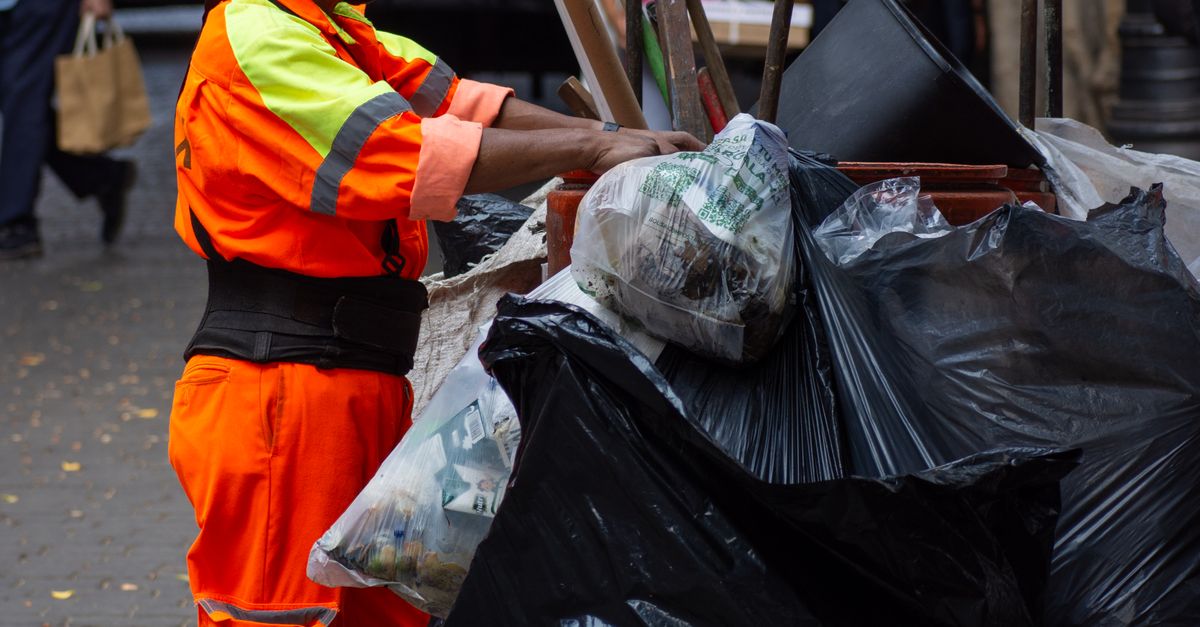
1. San Francisco, United States
San Francisco launched curbside recycling in the early 1980s and emerged as the initial major American municipality to make composting and recycling mandatory for every resident and business by 2009. The municipality’s Zero Waste Ordinance mandates the segregation of recyclables, compostable materials, and refuse destined for landfills.
The city consistently reports landfill diversion rates above 80 percent, among the highest in North America. Success is driven by:
- Pay-as-you-throw pricing
- Mandatory sorting with enforcement fines
- Public-private partnership with Recology
- Extensive composting infrastructure
San Francisco demonstrates how regulation, infrastructure investment, and community engagement can work together over decades.
2. Tokyo, Japan
Tokyo’s organized recycling framework traces its origins to the post-war era, yet contemporary garbage sorting regulations became much stricter during the 1990s. Local inhabitants are required to divide refuse into numerous classifications, frequently surpassing ten separate streams.
The municipality attains recycling percentages approaching 80 percent concerning specific material flows as a result of:
- Detailed municipal sorting guides
- Strict collection schedules
- Advanced waste-to-energy plants
- Strong cultural norms around responsibility
Tokyo’s effectiveness lies in meticulous organization and citizen compliance.
3. Freiburg, Germany
Since the 1970s, Freiburg has been a pioneer in environmental policy. Local initiatives were further bolstered by Germany’s 1991 packaging ordinance alongside extended producer responsibility legislation.
Freiburg’s recycling rate exceeds 65 percent, supported by:
- Comprehensive curbside sorting
- Deposit-return systems for beverage containers
- Biowaste composting programs
- Community education initiatives
The city pairs recycling with renewable energy and sustainable urban planning.
4. Curitiba, Brazil
Curitiba launched pioneering recycling programs in the late 1980s. Its “Green Exchange” initiative allows residents in low-income areas to trade recyclables for food and transit vouchers.
This socially inclusive approach:
- Increased engagement levels
- Decreased landfill reliance
- Enhanced community well-being
Curitiba demonstrates how recycling policy can integrate social equity.
5. Vienna, Austria
Vienna’s waste separation policies began expanding in the 1980s. The city combines high recycling rates with efficient waste-to-energy facilities that supply district heating.
Key features include:
- Color-coded bin systems
- Accessible collection points
- Transparent public reporting
- Energy recovery integration
Vienna diverts roughly one-third of waste to recycling and minimizes landfill reliance to near zero.
6. Taipei, Taiwan
Taipei launched a volume-based waste fee scheme back in 2000, which made it mandatory for locals to buy official garbage bags. Musical tunes are played by recycling collection trucks to announce their arrival, a method that prompts citizens to hand over their sorted refuse directly.
Outcomes include:
- Recycling rates surpassing 55 percent
- A significant drop in residential refuse
- Elevated adherence standards
The pay-as-you-throw system fundamentally transformed consumer habits.
7. Toronto, Canada
Toronto rolled out its Blue Box recycling initiative back in the 1980s, turning into a benchmark across North America. Today, the municipality runs one of the biggest municipal recycling networks on the continent.
Its policies feature:
- Extended producer responsibility
- Organics collection for households
- Landfill diversion targets above 70 percent
- Continuous public outreach
Toronto’s long-term commitment shows how early adoption can scale effectively.
8. Seoul, South Korea
Back in 1995, Seoul introduced volume-based waste charges. Local inhabitants are required to sort food scraps, recyclable materials, and standard trash separately, while RFID-equipped containers monitor the disposal of food waste.
Results include:
- Food waste recycling metrics surpassing 90 percent
- Substantial decreases in landfill usage
- Transformation of organic refuse into biogas and animal feed
Advanced technology has further refined Seoul’s already rigorous infrastructure.
9. Zurich, Switzerland
Zurich employs one of Europe’s strictest waste management systems. Since the 1990s, residents have paid per official garbage bag, incentivizing recycling.
The city reports recycling rates near 50 percent, supported by:
- Deposit-refund programs
- Widely distributed collection centers
- Robust enforcement mechanisms
Strong public trust and policy consistency underpin Zurich’s results.
10. Stockholm, Sweden
Stockholm has fine-tuned its recycling framework since the 1970s. Resource recovery is seamlessly combined by the municipality with district heating driven by refuse incineration.
Its strategy includes:
- Producer responsibility regulations
- Automated underground vacuum waste systems
- Public sorting stations
Less than 1 percent of Stockholm’s household waste ends up in landfill, demonstrating system maturity.
11. Portland, United States
Portland began aggressive recycling efforts in the 1980s. It expanded composting citywide in 2011 and reduced garbage collection frequency to encourage sorting.
The city achieves landfill diversion rates above 70 percent through:
- Mandatory composting
- Community-led environmental advocacy
- Transparent performance metrics
Behavioral nudges combined with infrastructure investment define Portland’s model.
12. Ljubljana, Slovenia
Ljubljana became the first European capital to commit to zero waste in 2014. Recycling reforms began earlier, emphasizing door-to-door separate collection.
The city now recycles over 60 percent of municipal waste and has drastically cut landfill dependence. Core policies include:
- Residual waste minimization targets
- Public reuse centers
- Clear bin labeling systems
Ljubljana proves that even smaller capitals can lead continental change.
The Broader Pattern Behind Long-Standing Success
Across these twelve cities, several consistent principles emerge: early policy adoption, economic incentives such as pay-as-you-throw pricing, extended producer responsibility, public education, and reliable infrastructure. Cultural alignment and enforcement also matter as much as technology.
What sets apart the oldest and most efficient recycling initiatives is not a solitary breakthrough, but rather generations of consistent policy, public participation, and gradual enhancement. These urban centers demonstrate that recycling triumphs develop via persistence, openness, and flexibility—transforming refuse administration from a city duty into a pillar of eco-friendly city living.
